Emergency debris netting at Union Chapel: Saturday call, Sunday completion
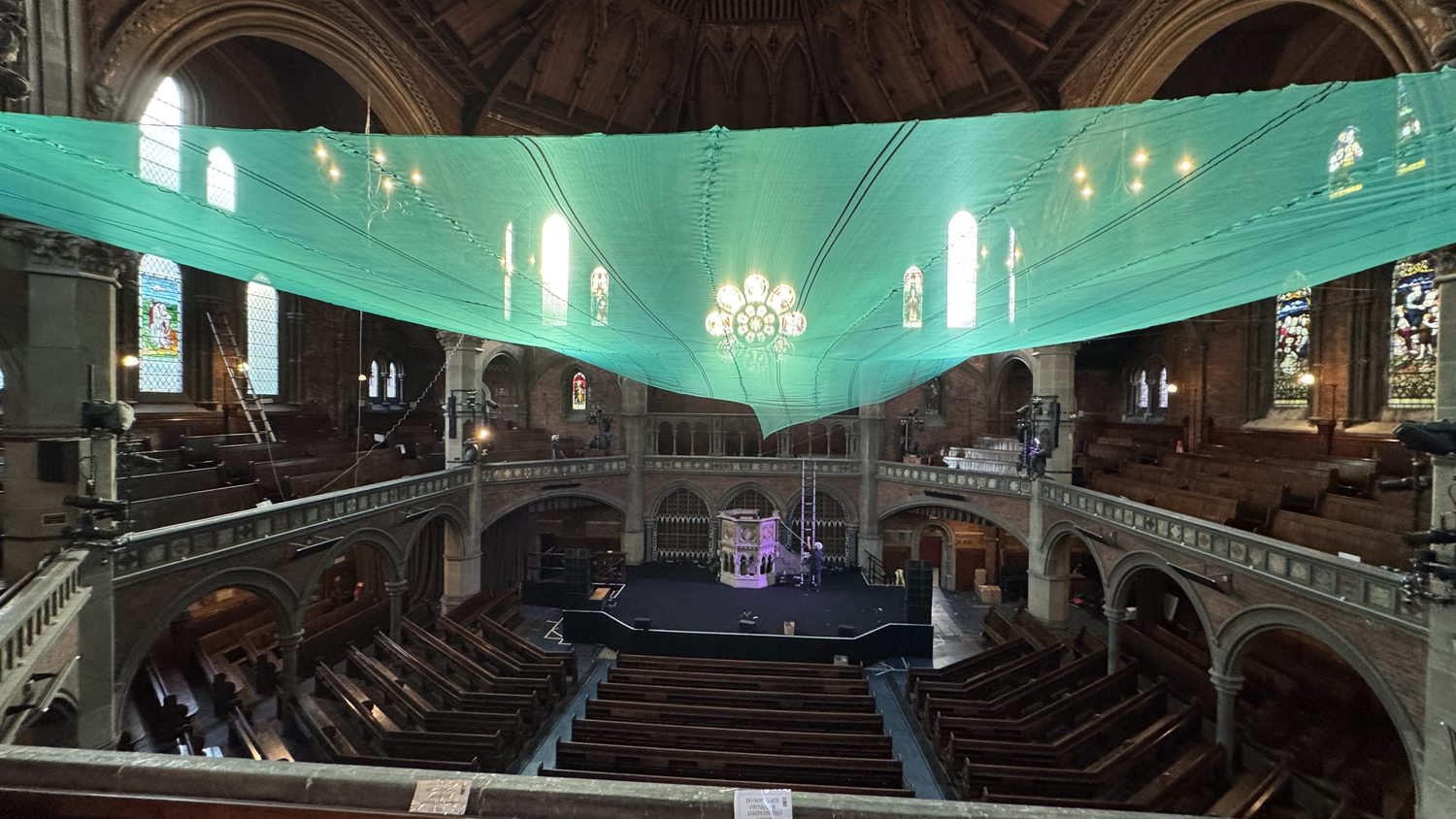
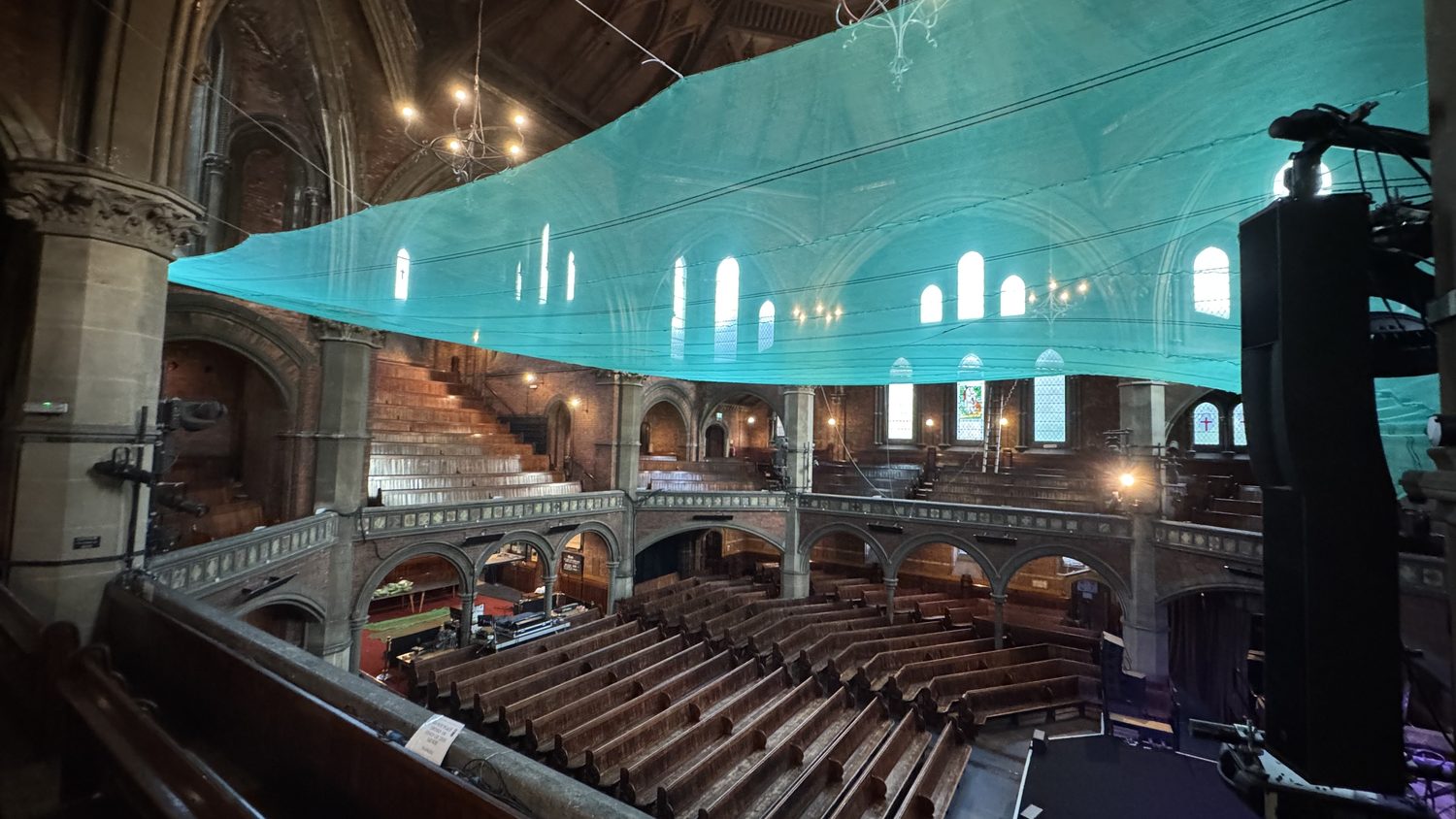
Project summary. Union Chapel, London. An urgent enquiry reached us on a Saturday afternoon, with events scheduled to begin at around 10:00 the following Monday. Temporary debris netting was specified, sourced, prepared and installed beneath the roof of the main chapel space across the weekend, and completed on the Sunday with no accidents or incidents. The installation is a temporary containment measure for small and lightweight debris. It is not an engineered debris-arrest system, and the distinction matters enough that we set it out in full below.
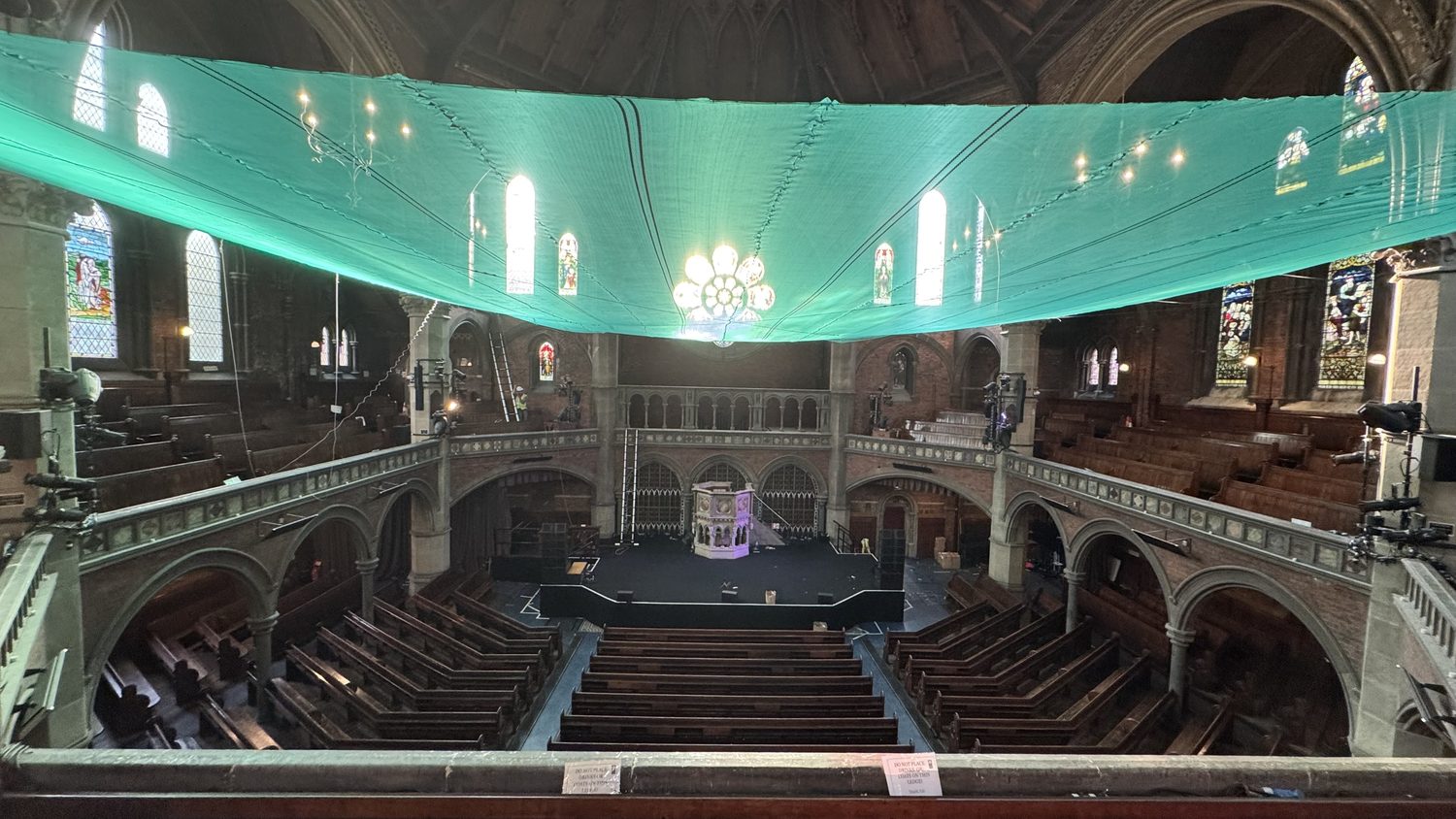
A Saturday afternoon call and a Monday morning deadline
Most genuinely urgent work in London is urgent for the same reason: a date is fixed and cannot move. That was the position here. Events were due to start at around 10:00 on the Monday, and the question was not whether the programme could be extended but whether the space could be made suitable for use before it began.
That left the weekend, which is the least convenient time to need anything from a specialist supplier. An enquiry like this one is really two problems arriving together. The first is the work itself. The second, and usually the harder one, is whether the materials to do it can be in your hands before the deadline.
The first job was procurement, not installation
On a weekday, sourcing netting is a phone call. On a Saturday afternoon it is a series of them, because trade counters close early, weekend stock is whatever happens to be on the shelf, and nobody is manufacturing to order until Monday, by which point the deadline has already passed.
The work before the work therefore involved assessing what the situation actually required, establishing what was genuinely obtainable within the window, sourcing materials across more than one supplier and location, and organising the collections and logistics to bring everything to site in time to install. Preparation was carried out so that the installation itself could run without pauses once it started.
This is the part of emergency debris netting work that clients rarely see, and it is where most weekend jobs are won or lost. It also shapes what can honestly be offered. What is available on a Saturday determines what can be installed by Sunday, and being straight about that at the outset is more useful to a client than optimism that collapses on the day.
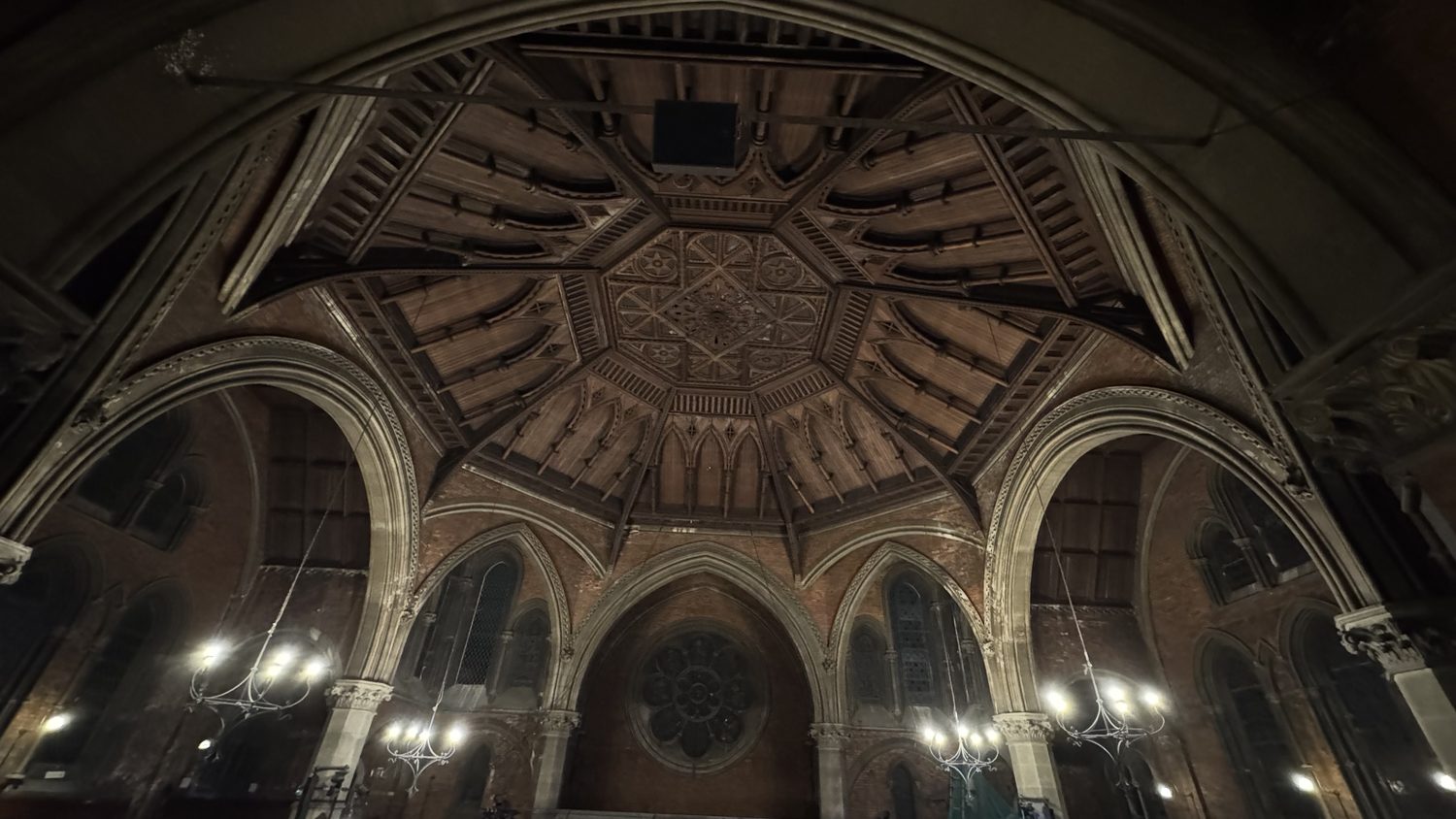
Installing overhead, without taking the room apart
The works involved installing temporary debris netting beneath the roof and ceiling area of the main chapel space, to provide containment for small and lightweight material that could otherwise fall from the roof structure into the space below.
Working at height over an open floor is the natural application for rope access in London. Conventional access across a large internal space means a substantial structure: time to erect, floor loading to consider, and time to dismantle again. On a programme measured in hours rather than weeks, and in a space that had to be clear and presentable for an audience on Monday morning, that is not a workable route. Rope access allows the same overhead area to be reached and worked without filling the room to do it.
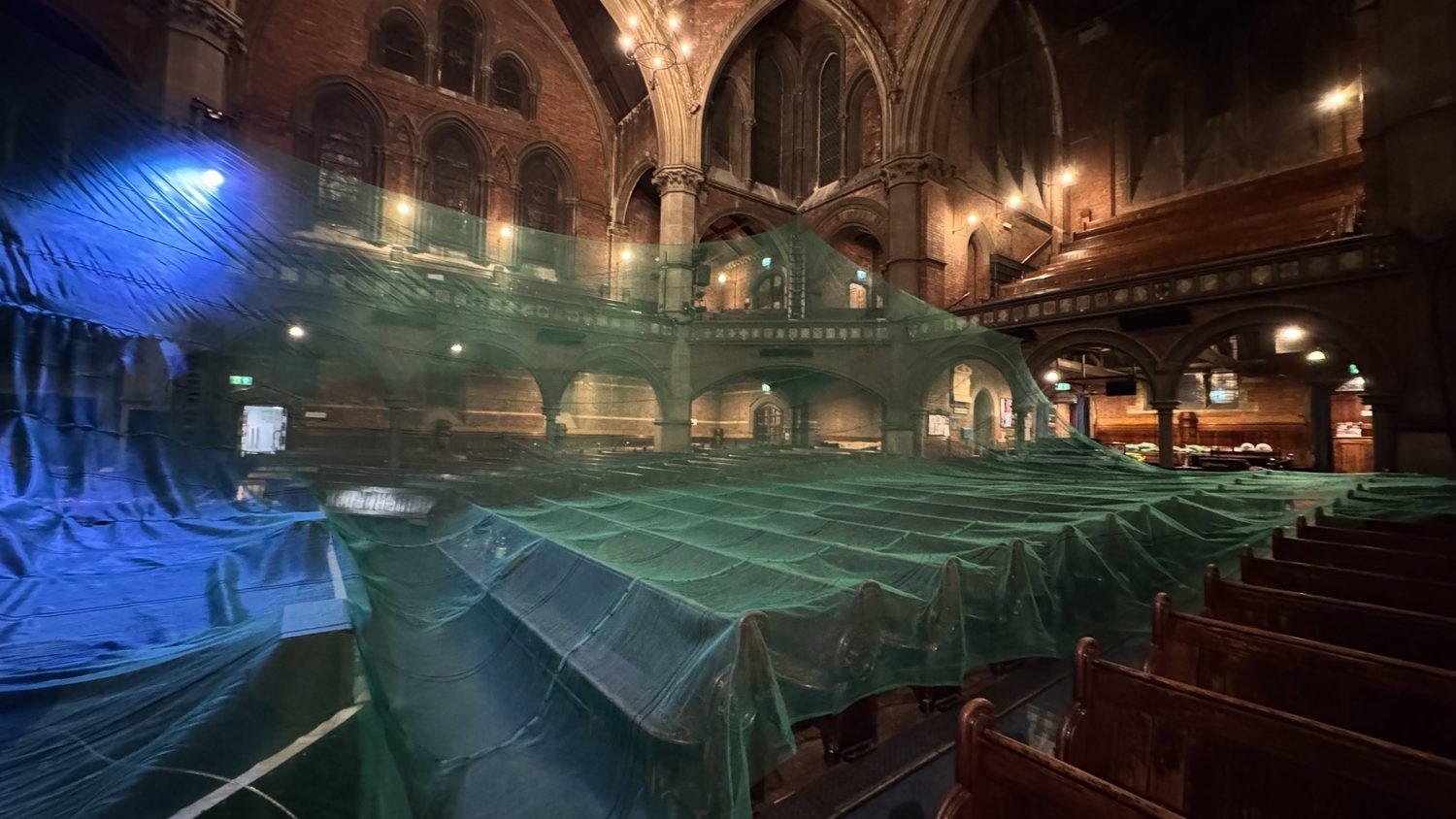
The installation was completed on the Sunday, to a high visual standard. In a space where the ceiling is part of what people have come to look at, a temporary measure that is visually intrusive is only half a solution, and finish was treated as part of the job rather than an afterthought.
What was installed, and what it is not
This is the section that matters most, and it is the one usually left out of write-ups like this.
A temporary containment measure
What was installed provides temporary overhead protection against small and lightweight debris falling from the roof structure. That is a real and worthwhile reduction in risk to people below, and it was what allowed the client to proceed with their planned activities. It was implemented within the materials and the time that were actually available over a weekend, and it should be understood as a temporary risk-reduction measure rather than a permanent structural solution.
What it is not
Because of the very short notice and the limited weekend availability of specialist materials, cargo netting and heavy-duty safety netting were not installed. The netting that was installed must not be described, or relied upon, as a system capable of arresting large or heavy pieces of timber.
A system intended to do that is a different proposition altogether. It would require appropriately rated netting, thicker cables, additional anchorage points, engineering consideration and testing, and it would be scoped, designed and priced as a separate piece of work with its own lead time. None of that can be assembled between a Saturday afternoon and a Sunday evening, and any contractor who says otherwise is describing something they have not done.
We are explicit about this for a practical reason as well as an honest one. A temporary measure presented as more than it is becomes a hazard in its own right, because people plan around protection they believe they have. A client who knows exactly what has been installed can make good decisions about the building. A client who has been told the problem is solved cannot.
Completed safely, and on time
The project was completed safely, with no accidents or incidents, and the installation was finished on the Sunday, ahead of the Monday morning deadline. The client was able to proceed with their scheduled events as planned.
The wider point is about response rather than netting. Urgent building maintenance in London is rarely a question of whether the physical work is difficult. It is a question of whether a contractor can assess a requirement, establish what is genuinely achievable, obtain the materials, mobilise a team and complete the work inside a window that has already started counting down, and then describe accurately what has and has not been achieved.
Urgent access and building-safety enquiries
If you are dealing with falling debris protection, a suspected defect overhead, or any access problem with a fixed date attached to it, tell us the deadline first. It determines everything else: what can be sourced, what can be installed, and whether the honest answer is a temporary measure now with a properly engineered scheme to follow.
We cover debris netting installation in London and the surrounding areas, including urgent weekend attendance where the situation genuinely calls for it.
Related: debris netting installation, roof surveys and condition reports, and rope access in Islington.
Need this done on a London building?
IRATA rope access teams, fixed prices, no scaffold. Reply within 24 working hours.