Repointing a Victorian chimney stack without a scaffold
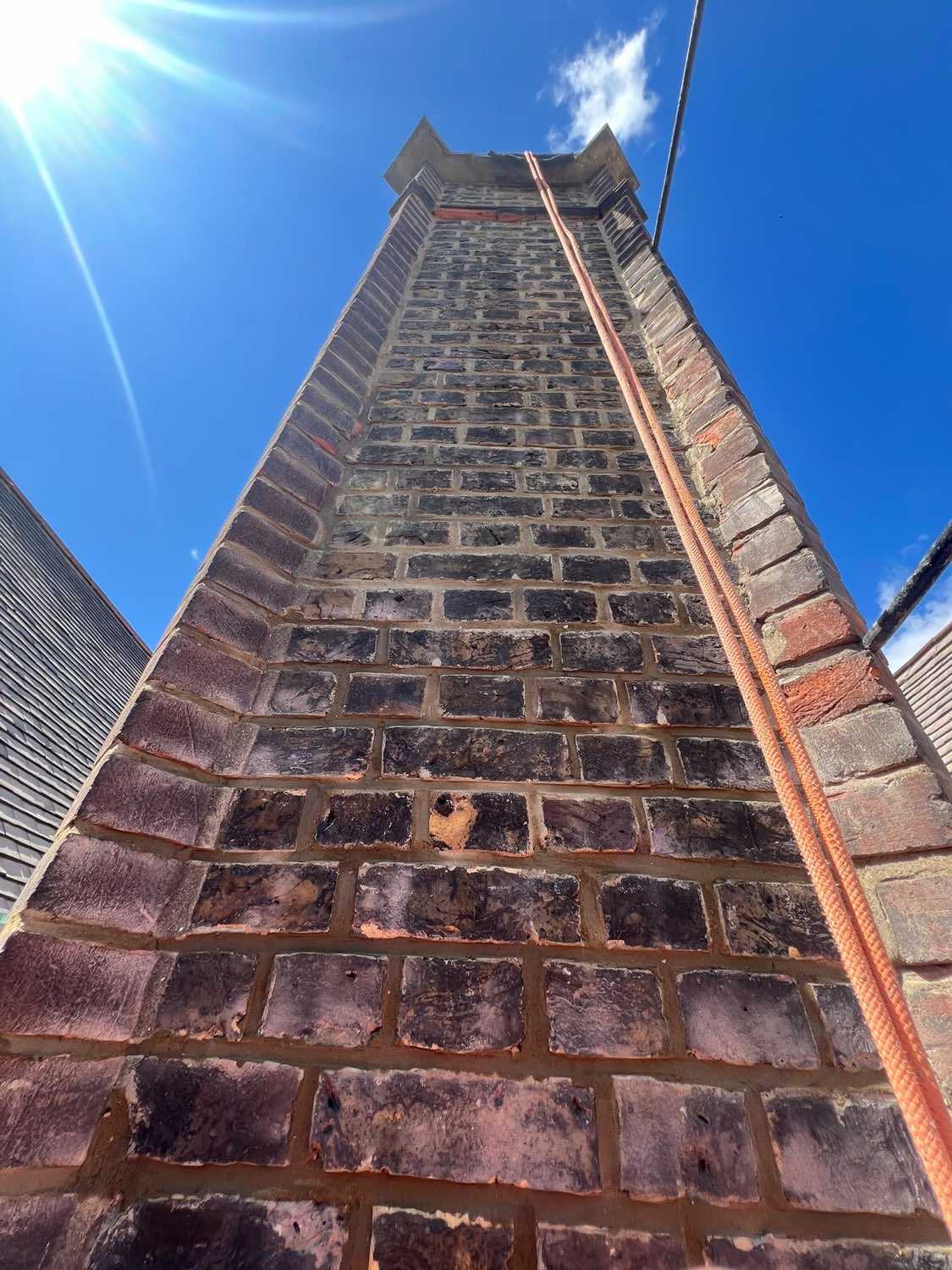
The chimney stack is the most exposed masonry on a London terrace. It stands clear of the roof on every side, it takes wind-driven rain from all four elevations, and nothing shelters it. So it is the first place the mortar goes, and usually the last place anyone looks.
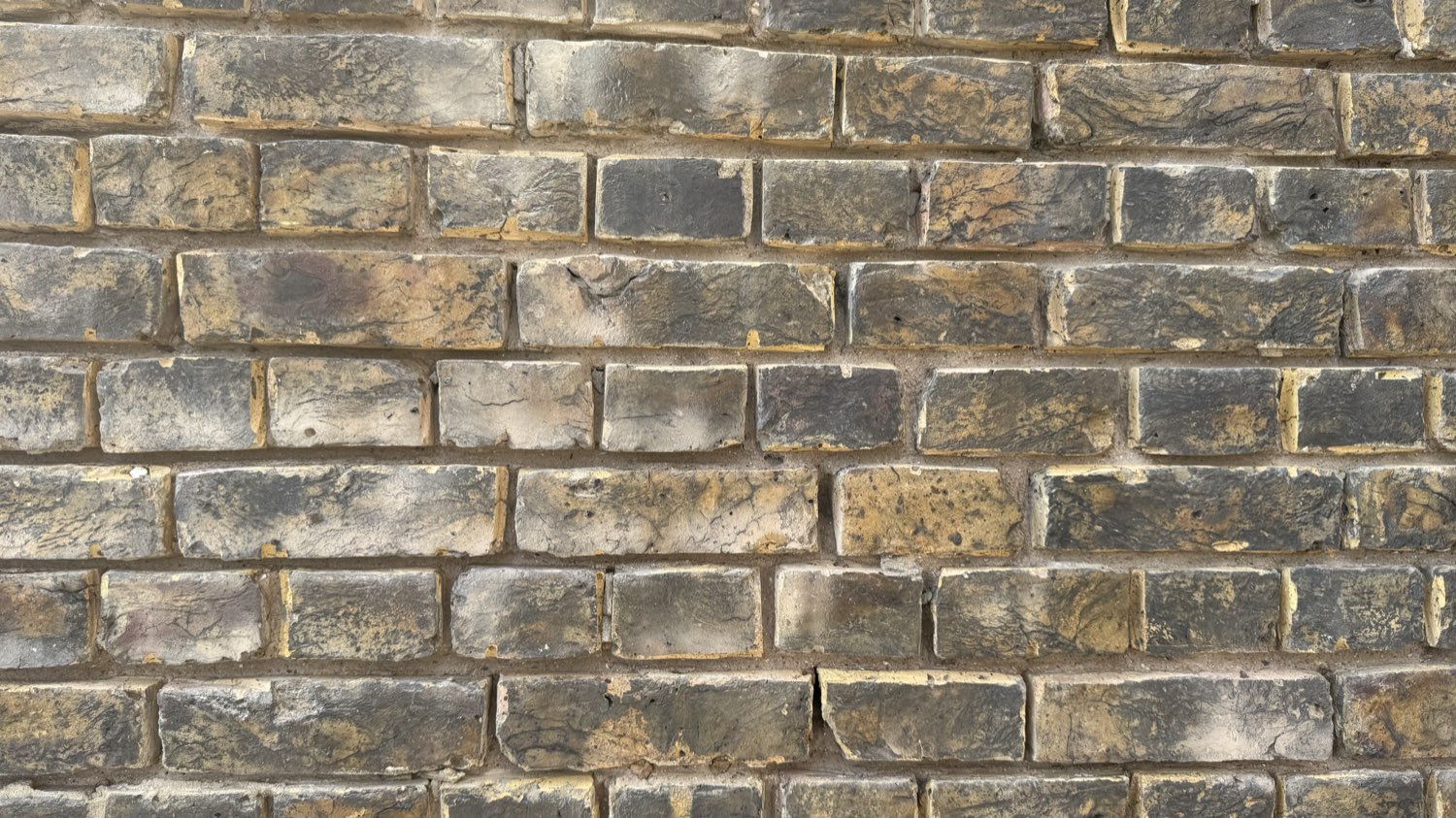
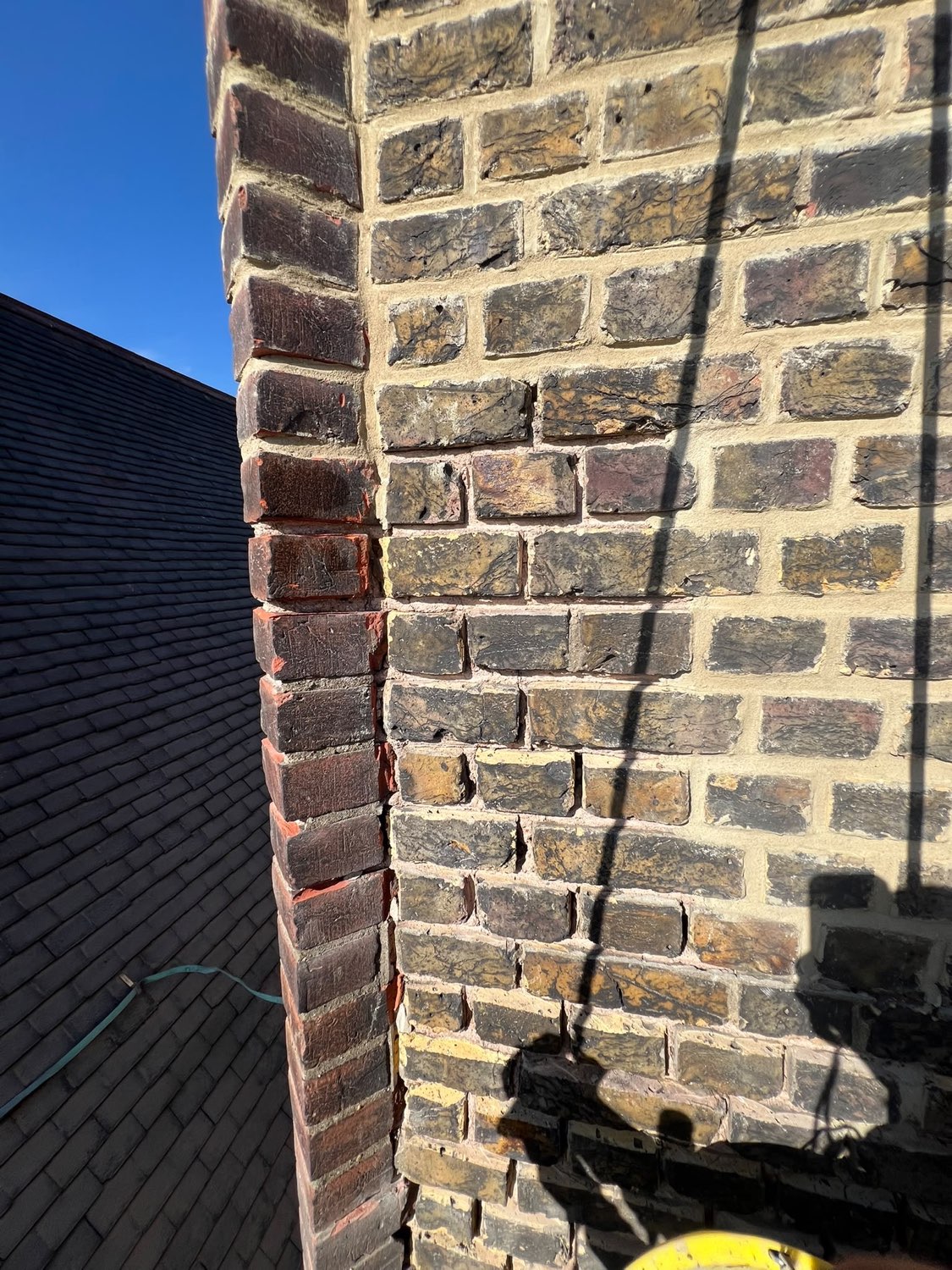
That photograph is the state we were called to on a Victorian terrace in West Hampstead. Yellow London stock, original lime mortar, and joints eroded well behind the face of the brick. Once a joint is recessed like that it stops shedding water and starts holding it.
What eroded joints actually do
The damage is rarely dramatic, which is why it gets left.
- Water tracks into the stack. A recessed joint is a shelf. Rain sits there, soaks into the mortar and travels inward, which is why damp on a chimney breast so often has nothing to do with the flue.
- Frost does the rest. Water in an open joint freezes, expands and lifts the arris off the brick. Once the face has spalled, the brick is absorbent for good.
- Eventually the bricks move. Mortar is what holds a stack together. Lose enough of it at forty feet and the problem stops being damp and starts being a stack over a public footpath.
The reason stacks get left: the scaffold costs more than the work
This is the honest economics of it. A chimney stack sits at the ridge, which is the single most expensive place on a building to reach conventionally. Scaffolding to it usually means a full scaffold up the elevation, a lift over the roof and a crash deck, and on a terrace it often means a licence and a neighbour's agreement too. On a small stack the access can cost more than the repointing.
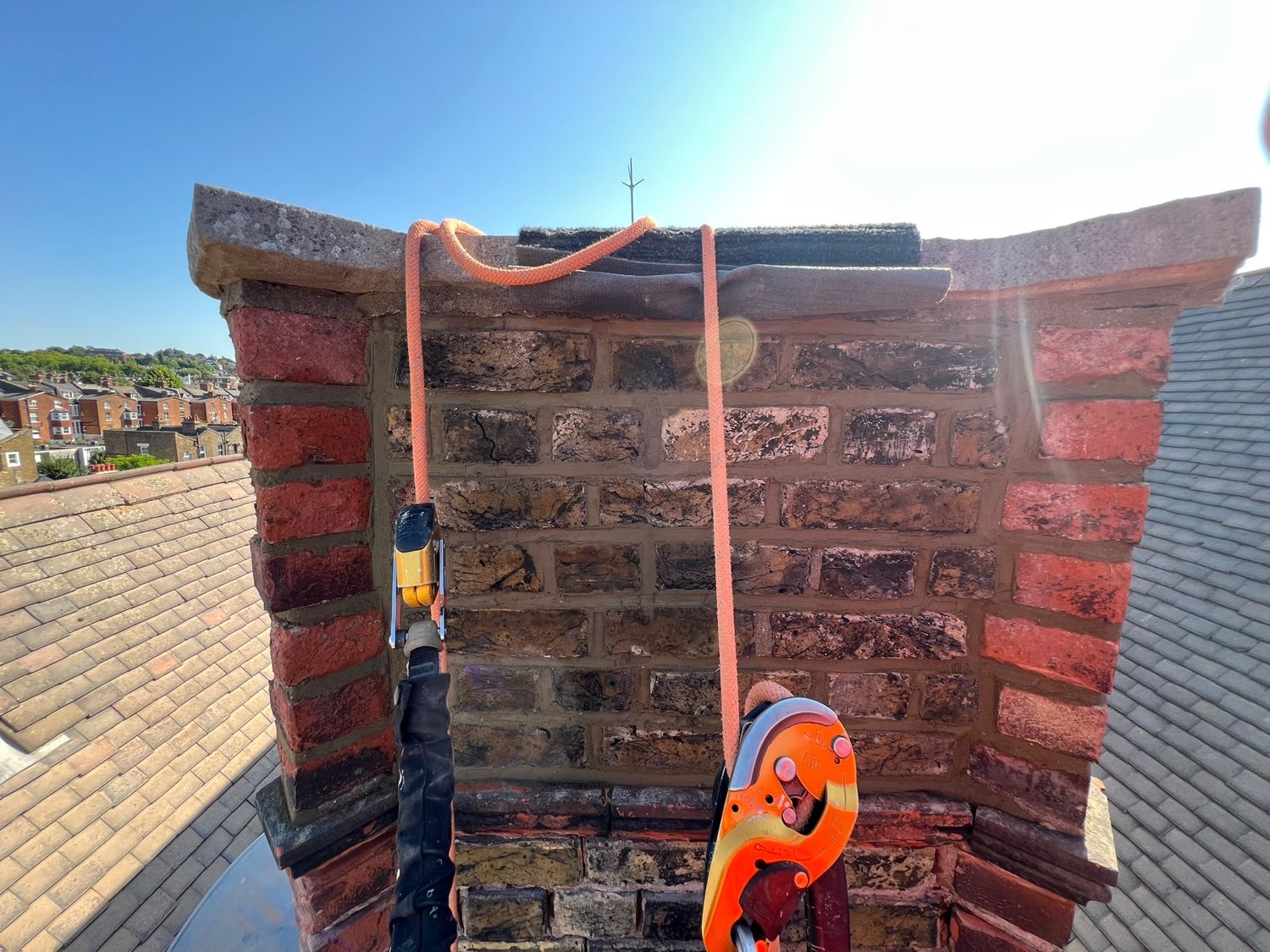
By rope access we rig from the roof itself. There is no structure to build, nothing standing in the garden for three weeks, and no scaffold hire running while the mortar cures.
How it is actually done
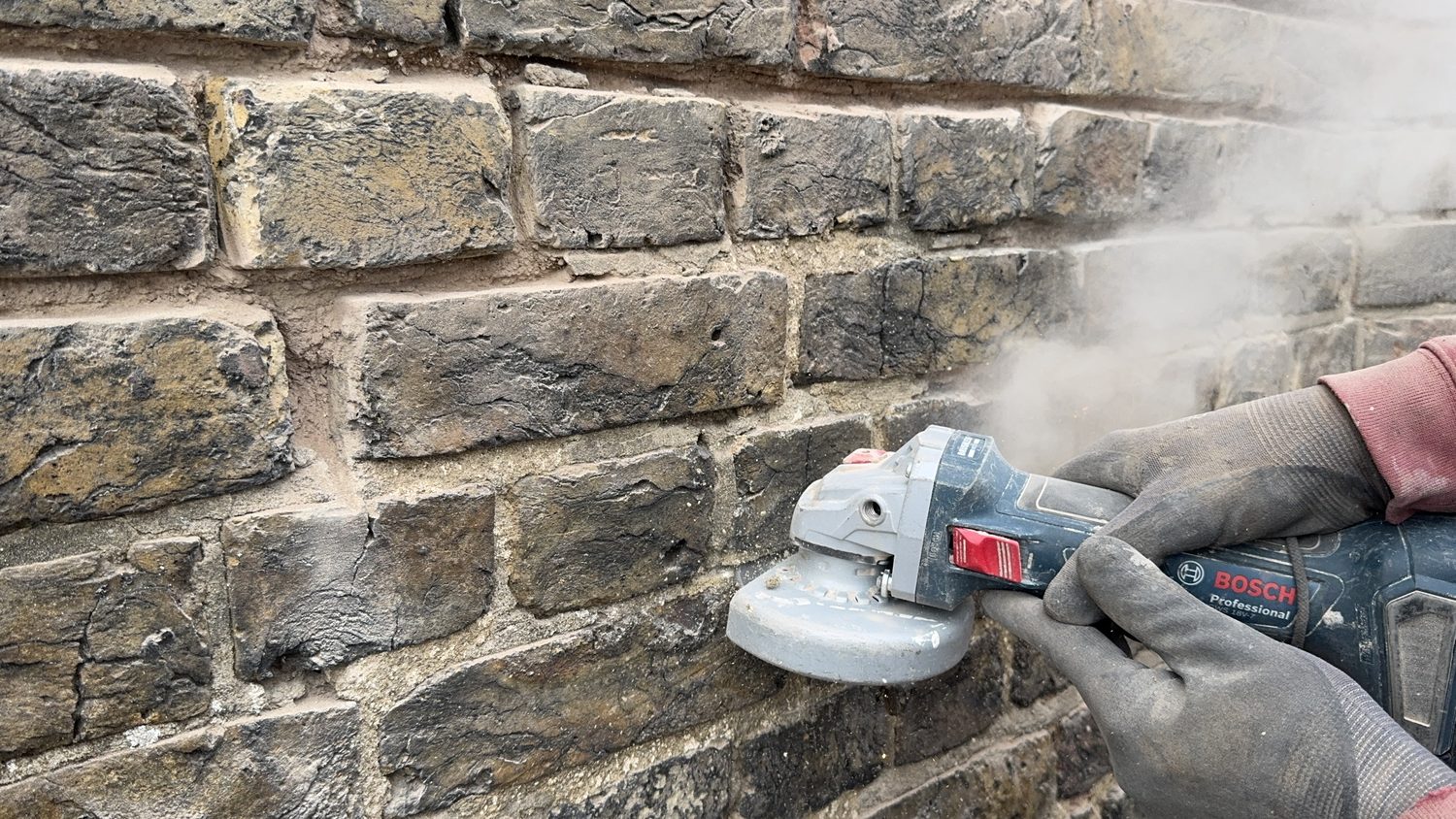
- Rake out properly. The joint is cut back to roughly twice its width, not scratched at the surface. Shallow pointing over soft mortar falls out within a couple of winters.
- Clean and dampen. Dust left in the joint stops the new mortar bonding. Dry Victorian brick sucks the water straight out of fresh mortar, so the joint is wetted first.
- Repoint in a matched mortar. Matched for strength first and colour second.
- Finish to match the original. The joint profile is what makes new pointing read as original rather than as a repair.
The mistake that causes most of the damage we see
Cement mortar on Victorian brick. It looks like a stronger repair and it is exactly the opposite.
Mortar is meant to be the sacrificial part of a wall. It should be softer than the brick, so that movement and salts are taken up by the joint, which you can replace. A hard cement joint reverses that: the brick becomes the weakest element, so the face spalls off instead. You end up replacing bricks rather than pointing.
Plenty of the worst stacks we work on are not suffering from age. They are suffering from a cement repair done in the 1980s.
How to tell whether yours is due
You do not need to go up to know. From the ground with a pair of binoculars, or from a photo on your phone at full zoom, look for joints that read as shadow lines rather than as flush mortar. If you can reach a joint and rake it out with a screwdriver, it is overdue.
A stack you can see daylight through, or one with vegetation growing out of a joint, is not a maintenance item any more.
What it takes
A single stack of this size is a short job once you are on it. The variable is never the pointing, it is the access, and that is the part rope access removes. We survey first, on the ropes, and quote from what is actually there rather than from what can be seen from the pavement.
If you have a stack you have never been able to inspect, send a photo and the postcode. We will tell you whether you are looking at repointing, a rebuild of the top courses, or nothing urgent at all.
Related: brick repointing, chimney maintenance, and rope access in West Hampstead.
Need this done on a London building?
IRATA rope access teams, fixed prices, no scaffold. Reply within 24 working hours.